Saturday, March 5, 2011

Avchd Hdv Editing 2010

XXI on the best movies ever.


As a contributor to the magazine Original Version, the association XXI MECCA (Movement for the Study and Critics of Film and Audiovisual in the XXI century) which aimed to develop a survey to to determine what the best movies ever, asked me to pick eleven films, one for each of the decades that have elapsed since the invention of cinematography. My choice was:


Period 1895-1909:

- Trip to the Moon ( Le Voyage Dans la Lune , 1902) by Georges Méliès.


Period 1910-1919:

- Intolerance (Intolerance , 1916) by DW Griffith.


Period 1920-1929:

- Amanecer (Sunrise , 1927) by FW Murnau.


Period 1930-1939:

- The Bride of Frankenstein (The Bride of Frankenstein , 1935) James Whale.


Period 1940-1949:

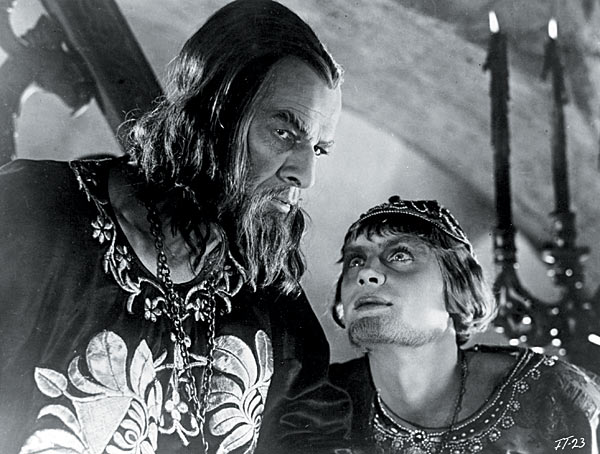
- Ivan terrible he ( Ivan groznyy I , 1944) of Sergei M. Eisenstein.


Period 1950-1959:

- ordet (Word) ( ordet , 1955) Carl Theodor Dreyer.


Period 1960-1969:

- Gertrud (idem, 1964) Carl Theodor Dreyer.


Period 1970-1979:

- Stalker (idem, 1979) Andrei Tarkovsky.


Period 1980-1989:

- Sacrifice ( Offret , 1986) Andrei Tarkovsky.


Period 1990-1999:

- Lost Highway (Lost Highway , 1997) by David Lynch.


Period 2000-2009:

- Yi Yi (idem, 2000) by Edward Yang.


Thursday, March 3, 2011

Community Service Cover Letter

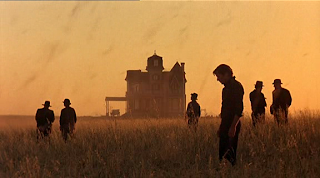
Days of Heaven (Days of Heaven, 1978) Terrence Malick.


Chicago, 1916. After discussion with his foreman, who hit probably causing death, Bill (Richard Gere) decides to flee and emigrate with his girlfriend Abby (Brooke Adams) and her little sister Linda (Linda Manz) to the great estates of Texas, where seasonal workers would be recruited by a wealthy farmer (Sam Shepard).

not hide the deep admiration I profess to Terrence Malick, whom I consider the director's most important modern American cinema. He alone among his fellow peers, has managed to create its own language and non-transferable; understood language the conjunction of a series of formal elements, narrative and content that are repeated in a constant in all the works of an author.

There are many filmmakers who have style, but few that have a truly personal language, and Malick is, no doubt, one of them. His films like best or least, but what nobody can question is that we have a director who, when created, has always been consistent with its conceptual and aesthetic convictions.

The contemplative nature of his films and the poetic urge them, make Malick is an artist closer to European directors like Tarkovsky or Erice as other members who once constituted the so-called Hollywood Renaissance ( Spielberg, Scorsese, Coppola, Lynch ...).

's up small time films, revolves around two main themes: the loss of innocence and a return to paradise lost.

Following the postulates of the German philosopher Martin Heidegger, in his films man can only be in the world, with whom he formed an all existential, hence the intimate relationship in their works is established between the human and natural setting, which filmed at a level of detail and amazing sharpness.

Its elliptical narrative, not sloppy, it departs from the classic standards and put in the service of an essentially visual film, heir to the silent era, giving always the image on the floor, usually tap the account being used, often through the narrative device of the voiceover.

All the above is found in Days of Heaven, his second film after the impressive debut which resulted Badlands (Badlands , 1973).

is a film unique and captivating beauty, tragedy overcome with a strange lyricism that runs from start to finish our senses spellbound. As in Badlands is the voice of a girl who introduces and accompanies us along a love triangle story again have a place where crime and flight.

Malick film in the characters return to paradise lost (so-called "bad lands" of South Dakota and Montana Badlands , the island of Guadalcanal in The Thin Red Line , of Virginia The seventeenth-century New World or for growing large grain of Texas on the tape that concerns us here) to purge their sins, contrary to what happened to the biblical Cain, who was expelled from Eden after sin . However, this almost virgin nature always comes back to be tainted by the crimes of a man who is lost in the search of existential meaning. Photographed

a sublime way by English Nestor Almendros, who won an Oscar for his exceptional work, Days of Heaven gives us plenty of pictures to remember: the great house that looks out a picture of a chair Hopper fields in which only its monumental structure warns us of the human presence, train wagons infected people seeking work to be something in the mouth, the many ears of wheat swaying in the wind, the biblical plague of locusts that occurs near the end ... all generated by the inspired poetic vision of its director.
After this magnificent film, Malick directing reject The Elephant Man, he moved to France, remaining dormant for a couple of decades to get back in the late nineties with The Thin Red Line: the most complex war film , beautiful and profound film history, his great masterpiece along with the subsequent and misunderstood The New World.

Rating: very good .

Tuesday, March 1, 2011

How Many Calories In Salad With Dressing

Road to Freedom (The Way Back, 2010) by Peter Weir.


A group of prisoners of different nationalities (Jim Sturgess, Ed Harris, Colin Farrell, Dragos Bucur ...) escapes in 1940 of a Soviet gulag located in Siberia, launching a flight of more than six thousand miles that takes them through several countries to reach India.

anchored in a context of mediocrity as the one that characterizes the state of cinema today, thank you very interesting proposals such as the one offered by the Australian director Peter Weir (Gallipoli , The Dead Poets Society , Master and Commander ...). A Homeric reminiscences clear film, based on real events, and adapting the book The Long Walk (1955) by Slavomir Rawicz.

is a geographical odyssey suffering and survival that seek to address the unfair and arbitrary political boundaries that restrict human freedoms.

The story features a different character set must join forces in their common goal of overcoming the myriad of natural and environmental harshness with which they will encounter along its long journey.

One of the strengths of the film is the changing landscape in which the story (forest, snow, valleys, deserts, mountains ...), benefiting from a extraordinary photography and majestic and panoramic shots that give it some documentary stamp.

Weir gives his film a leisurely pace to scare away those who love video clip, taking time to tell time and provide information about their players.

The distribution line high, highlighting the pride and contained composition and amazing Ed Harris (for good) characterization Farrell makes a rude "urki" (criminal street).

There are The Way Back, however, a number of errors unfortunately affect their final assessment, as that is repetitive in its grounds (which means that sometimes no more than the mere succession of topical stamps on the confrontation between man and nature), that certain characters are vaguely outlined, the decision to let any of them "pulled" by the way, or something hasty final stretch. Fault, in any case, not support the hypothesis that we are facing a great film, and film undoubtedly human value, which is far superior to most productions nowadays come to our cinemas.

Rating: Good .

Saturday, February 26, 2011

How Long For An Enema To Work

The face (Ansiktet, 1958) by Ingmar Bergman.


Sweden, mid-nineteenth century. Dr. Vogler (Max von Sydow) and his company of "magnetic stage" consists of his wife (Ingrid Thulin), who serves as an old witch (Naima Wifstrand) and the representative of the show (Ake Fridell), through the forest carriage to go to a small town where they have been invited into the house of Consul Egerman (Erland Josephson) for a private function. There also awaits Dr. Vergerus (Gunnar Björnstrand), which aims to analyze the methods of operation of the mysterious Dr. Vogler.

Bright

mirrors game that Bergman presents us 's face, a film in which the author of The Seventh Seal again reflect on common themes in his work as the truth, death, social masks or the relationship between the sexes.

With a gloomy atmosphere which refers to German Expressionism, the film alternates moments near the gothic story with others who enters without any shame in lewd comedy. His flirtation with the fantastic (the relationship between the earthly world and the hereafter) relate it to The Phantom Carriage ( Körkarlen , 1921) by Victor Sjöström, one of the masterpieces of the silent era that celebrates the visually at times.

The plot revolves around establishing the confrontation between reason / science and illusion / belief among the explainable and the inexplicable, the visible and invisible. Opposing positions that are illustrated in the characters of Dr. Vergerus and Dr. Vogler respectively.

Vogler and his troupe were invited to the mansion to suffer the humiliation of men of science in a vain example of how modernity is destroying any remnant of primitive superstition. Despite his triumph will be only partial, as reflected in the shocking (for close to terror) sequence that takes place in the attic near the end of the film.

Bergman also delves into the importance of acquiring the masks, in a metaphorical sense, as a means for the artist to be taken seriously by the public as lacking the same, it loses its aura of notoriety becoming a simple more mortal, whose sole purpose is subsistence.

addition to the foregoing, the wise management of the staging and the excellent work of the entire cast make Ansiktet a remarkable job in the extensive filmography of the Swedish master.

Rating: very good .